12:32 PM, 25 April 2026
Fetching weather...
Watch Live

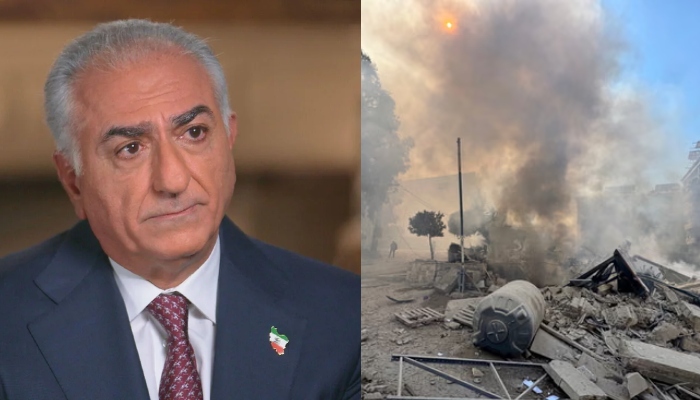
Reza Pahlavi remarks on Iran strike casualties spark debate

Gravatar Avatar Rabbia Zafar | 3 hours ago
## **Title** Reza Pahlavi remarks on Iran strike casualties spark debate --- ## **News Story (300 words)** Reza Pahlavi, the son of Iran’s former monarch, has drawn attention after describing civilian deaths in recent airstrikes on Iran as “collateral damage.” His remarks come amid ongoing tensions involving the United States and Israel, whose strikes have reportedly caused significant casualties. In an interview, Pahlavi was questioned about the scale of civilian losses and whether his stance might affect his political credibility. Responding to the criticism, he said he does not trust casualty figures released by Iranian authorities. He argued that while deaths have occurred, a large proportion of those killed were affiliated with government structures. However, independent reporting presents a different picture. According to Reuters, at least 3,400 people were killed during the period of strikes from late February until a ceasefire was reached. Thousands more were injured, including many civilians and children. One of the most alarming incidents highlighted in reports involved an attack on a school, where dozens of young students lost their lives. Such events have intensified global concern about the humanitarian consequences of the conflict. Pahlavi’s remarks have triggered criticism from analysts and rights observers, who argue that labeling civilian deaths as collateral damage risks minimizing the human cost of war. Some experts also suggest that such statements could influence public perception of his political ambitions. The broader conflict continues to draw international scrutiny, with calls for accountability and greater protection of civilians. As tensions persist, the debate over the narrative and responsibility for casualties remains a sensitive and evolving issue in regional and global discourse. --- ## **Tags** Reza Pahlavi, Iran strikes, civilian casualties, Middle East conflict, US Israel tensions, global reactions --- ## **Meta Description** Reza Pahlavi’s remarks on civilian deaths in Iran strikes as collateral damage spark debate amid reports of rising casualties and humanitarian concerns. --- ## **Focus Key Phrase** Reza Pahlavi Iran strike remarks --- ## **Slug** reza-pahlavi-iran-strike-remarks-debate

Reza Pahlavi, the son of Iran’s former monarch, has drawn attention after describing civilian deaths in recent airstrikes on Iran as “collateral damage.” His remarks come amid ongoing tensions involving the United States and Israel, whose strikes have reportedly caused significant casualties.

In an interview, Pahlavi was questioned about the scale of civilian losses and whether his stance might affect his political credibility. Responding to the criticism, he said he does not trust casualty figures released by Iranian authorities. He argued that while deaths have occurred, a large proportion of those killed were affiliated with government structures.

However, independent reporting presents a different picture. According to Reuters, at least 3,400 people were killed during the period of strikes from late February until a ceasefire was reached. Thousands more were injured, including many civilians and children.

FIFA confirms Iran World Cup 2026 spot, rejects Italy rumours

One of the most alarming incidents highlighted in reports involved an attack on a school, where dozens of young students lost their lives. Such events have intensified global concern about the humanitarian consequences of the conflict.

Pahlavi’s remarks have triggered criticism from analysts and rights observers, who argue that labeling civilian deaths as collateral damage risks minimizing the human cost of war. Some experts also suggest that such statements could influence public perception of his political ambitions.

The broader conflict continues to draw international scrutiny, with calls for accountability and greater protection of civilians. As tensions persist, the debate over the narrative and responsibility for casualties remains a sensitive and evolving issue in regional and global discourse.
 

you may like
**Title:** KP chief minister warns of boycott over delay in Imran Khan cases --- **News Story (Approx. 300 words):** Khyber Pakhtunkhwa Chief Minister Mohammad Sohail Afridi on Friday warned that the provincial government may reconsider its cooperation with the federal government, including a possible boycott, if delays in hearing cases related to PTI founder Imran Khan continue. Speaking at a cabinet meeting, the chief minister said that if such trends persist, the provincial government would be forced to reassess its current approach towards the federation. He stressed that Pakistan is increasingly being recognised globally for promoting peace and dialogue, an approach he said was consistently advocated by Imran Khan, who has long maintained that military operations and conflict are not sustainable solutions and that lasting peace can only be achieved through negotiation. Afridi said the PTI has always prioritised national interest over political gains and has demonstrated responsible political behaviour, even when it involved political costs. He added that participation in federal meetings had been undertaken in good faith to support national objectives. However, he expressed concern over what he described as continued political discrimination against PTI, including alleged excessive force against party workers and violations of private spaces. He also raised concerns about reported mistreatment of Imran Khan’s family members and denial of access to his personal physicians and relatives, calling it a violation of fundamental rights. The chief minister also objected to the suspension of CNG supply in Khyber Pakhtunkhwa, stating that provinces producing natural resources have the first right to their use under the law. He warned that failure to resolve the issue with SNGPL would invite a strong response, including a boycott option. Afridi further announced steps for public participation in the Annual Development Programme 2026–27, including a feedback system through official social media channels. The cabinet also approved fiscal reforms, governance measures, prison rule amendments, and healthcare-related initiatives aimed at improving service delivery and institutional performance. --- **Tags:** Khyber Pakhtunkhwa, Imran Khan, PTI, Pakistan politics, federal relations, Sohail Afridi --- **Meta Description:** KP Chief Minister Sohail Afridi warns of boycott over delays in Imran Khan’s cases, criticises federal policies, and outlines governance reforms. --- **Focus Key Phrase:** KP chief minister boycott warning Imran Khan cases --- **Slug:** kp-chief-minister-boycott-imran-khan-cases-warning

KP chief minister warns of boycott over delay in Imran Khan cases

2 hours ago
TRENDING NOW
MUST WATCH
INNOVATION